An overgrown lot, field edge, camp road, or piece of woodland can look like one problem from a distance. Up close, it is usually several: brush and saplings, hidden stone or wire, wet spots, poor access, and an unclear idea of what the ground needs to become. The fastest way to create more work is to start cutting before deciding what stays, where equipment travels, and what happens after the vegetation is gone.
A better approach is to work from the property's next use. A trail, open field, driveway route, homesite, utility corridor, and construction area can all begin with overgrown land, but they need different finishes. This guide walks through the decisions that make clearing useful instead of temporary.
1. Decide what the ground needs to do next
Start with the outcome, not the equipment. A property owner may want a place to walk, a clearer view, a wider driveway, a usable field edge, room for a shed, or the first stage of a larger building project. Each goal changes the work limits, the way material is handled, and whether roots, stumps, drainage, or final grading matter.
Mark the area you actually want opened before anyone mobilizes. Note trees to keep, stone walls, visible boundary markers, old fencing, drainage outlets, culverts, wells, septic components, and the route equipment would use. A small sketch, survey, or phone photos from several angles can turn a vague clearing request into a usable plan.
It also helps to separate vegetation management from full site preparation. Vegetation management may be enough for a trail, field edge, or recreational area. A future building area, access road, or utility route can need a more connected scope involving clearing, excavation, drainage, and grading. Cross Country's Maine land services bring those phases together when the brush is only the first obstacle.
2. Walk the site before choosing a method
Dense growth can hide the conditions that control the job. Walk the site on foot where it is safe to do so. Look for changes in slope, soft ground, ledge, ditches, old dump areas, wire, scrap, exposed roots, overhead lines, and anything that would make a machine pass unsafe or expensive. Do not assume a green patch is solid, level ground simply because it has not been used recently.
Pay special attention to where water already moves. A wet hollow, seasonal drainage path, or low spot at the bottom of a slope can become a problem when vegetation is removed or equipment repeatedly travels over it. The goal is not to leave every difficult spot alone. It is to identify it early enough to choose an access route and a finish that will hold up.
Where a new driveway or access route is part of the plan, begin with the route rather than the most overgrown area. The residential land-services page explains why clearing, access, drainage, and stabilization often have to work together. Opening the wrong path first can leave a crew crossing freshly disturbed ground again later.
3. Identify utilities and features that must stay
Before digging, trenching, installing posts, or disturbing the ground, request utility notification through Dig Safe's Maine process. The notification system helps member utilities respond to an upcoming excavation, but it does not account for every privately owned line or site feature. Wells, septic components, private power, irrigation, old drainage, and unmarked wire deserve the same attention before work begins.
Define clear work limits around the things that remain. Flag mature trees, stonework, field edges, property corners, culverts, and protected areas. That protects the property, gives the operator a clear target, and keeps a manageable clearing job from expanding a few feet at a time until the material plan and cost no longer match.
Brush that has grown around a house, camp, barn, driveway, or work area can be particularly deceptive. It may conceal sharp debris, buried objects, or a tight turning radius. The right first step is usually a focused site review, not sending a larger machine into the middle of unknown ground.
4. Match the clearing method to the vegetation and finish
Light grass, weeds, and accessible field growth may be manageable with a mower or brush cutter. Those tools are useful where the ground is open, the stems are small, and the work can be completed without creating a separate disposal problem. They are less practical once brush becomes dense, access gets rough, or the material cannot simply stay where it falls.
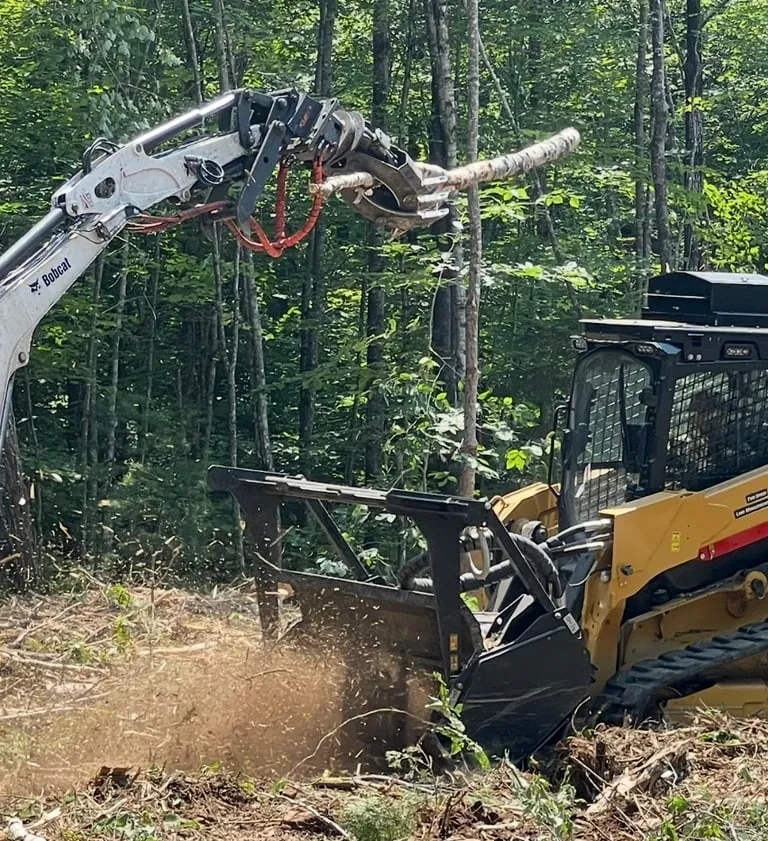
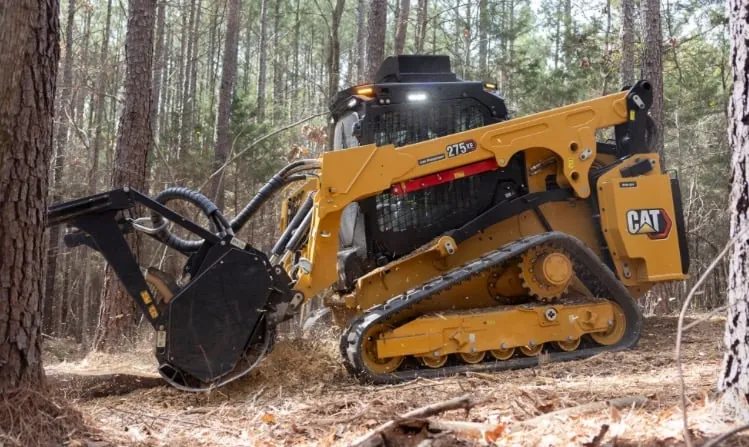
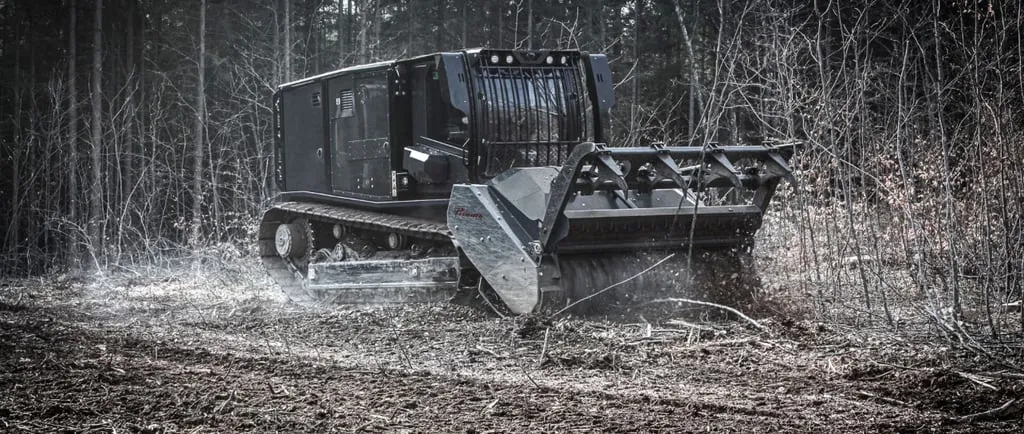
Forestry mulching is often a strong fit for brush, saplings, trail corridors, overgrown field edges, and vegetation management. It processes suitable material into a mulch layer instead of leaving piles that need to be moved later. Cross Country's forestry mulching service is designed around the terrain, vegetation, access, and intended finish, rather than a one-size-fits-all acreage number.
Mulching is not the same as construction clearing. A foundation area, septic location, utility trench, or finished building pad may need trees and stumps removed, material handled, and the ground prepared for excavation. When that is the outcome, the work should be planned with the site-preparation work that follows instead of treating a vegetation pass as the finished project.
5. Clear in a sequence that preserves access and soil
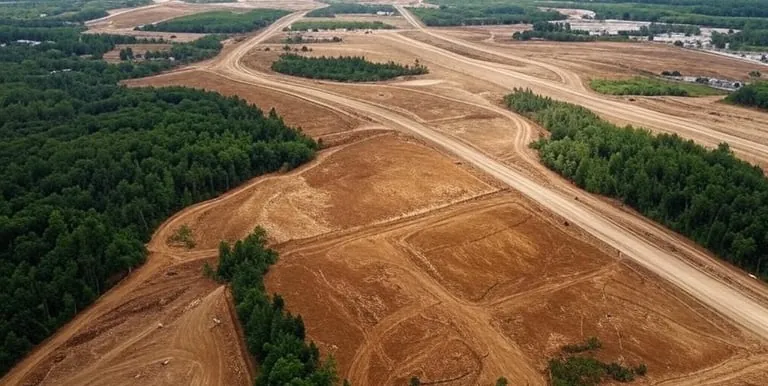
Work from a stable access point and keep a clear route back to the entrance. On a larger property, it is often smarter to open the access route first, then the priority work area, then the lower-value edges. This sequence lets the property remain usable while the work progresses and avoids trapping equipment behind brush or material.
Avoid repeated tight turns on soft ground and avoid piling material in a ditch, at a culvert, or where a future driveway needs to go. A cleared area should not send runoff toward a building, road, or neighbor's property. The Maine Department of Environmental Protection's erosion-control guidance emphasizes preventing erosion and using measures such as mulch and vegetation to stabilize disturbed ground.
Timing matters too. During spring thaw or after heavy rain, saturated ground can rut quickly and make a simple project harder to finish well. During drier or firmer conditions, access may be easier, but dust, fire risk, and the plans for the next phase still need attention. Work backward from the date a builder, utility crew, surveyor, or road contractor needs the site.
6. Pause early around wetlands, water, and steep ground
Clearing close to wetlands, streams, ponds, shoreland areas, and steep slopes calls for an early review. Maine's wetlands protection information explains that wetlands are protected at state and local levels and perform important water-storage and water-quality functions. The boundary is not always obvious from a casual walk through the woods.
That does not mean every overgrown parcel needs the same level of permitting or protection. It means the clearing plan should not guess. Keep vegetation where it is stabilizing a slope or screening a water edge, confirm the limits before machinery crosses sensitive ground, and bring in the right project partners when the site plan or local rules call for it.
Cross Country's civil and environmental sitework capabilities are particularly relevant when clearing must connect to erosion control, culverts, drainage, access, or a broader compliance plan. Planning those pieces together is usually less disruptive than fixing them after the first clearing pass.
7. Decide where the cut material will go
Every branch, stem, stump, and pile needs a plan. Mulch can be a useful finish on trails, woodland edges, and areas where ground cover is valuable. It is not a substitute for a clean subgrade where construction, a septic system, or a finished lawn needs to follow. Brush piles take up more space than expected and can become difficult to move once they settle.
Think about material handling before the work begins. Can it stay on site? Does it need to be chipped, hauled, moved to a designated location, or processed as part of the clearing method? A clear answer protects future access and keeps a temporary pile from landing in the middle of a turnaround, work zone, or drainage route.
Property owners comparing options can use Cross Country's guide to land-clearing costs in Maine to see why vegetation density, access, stump work, hauling, and the planned finish all change the scope. The lowest number is not always the lowest total cost when the material or ground has to be handled twice.
Bring the right details to an estimate
You do not need a finished engineering plan to start a useful conversation. Share the property location, a rough work area, photos from the entrance and inside the growth, the result you want, and any details you already know about access, utilities, water, boundaries, or trees to retain. Those basics help distinguish a focused clearing pass from a site-preparation project that needs a broader sequence.
Ask what the finished ground will look like and what conditions could change the approach. A clear answer about stumps, material, access, drainage, and final grading makes it easier to compare proposals based on the work your property actually needs.
8. Know when a professional site plan is worth it
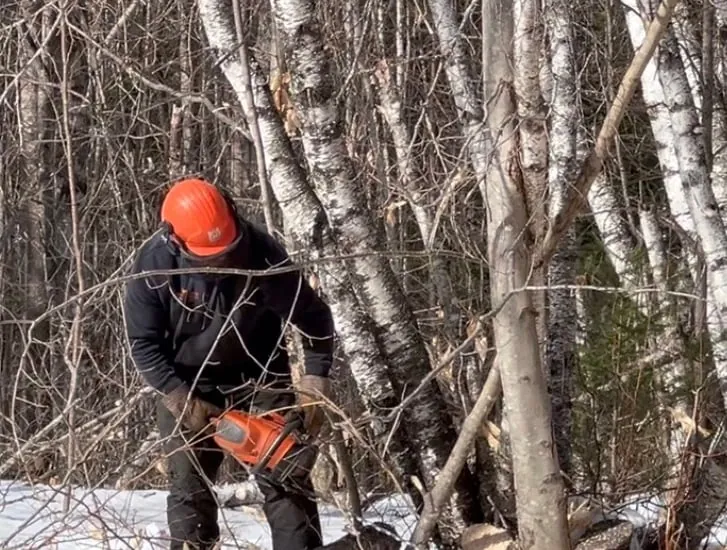
A homeowner can often handle light maintenance in an open, familiar area. A professional is usually the practical choice when the site has large acreage, dense brush and saplings, steep slopes, long access, wet ground, buried debris, large trees, unknown utilities, or a finish that needs to support construction. The same is true when the work needs to coordinate clearing, roads, drainage, excavation, or stabilization.
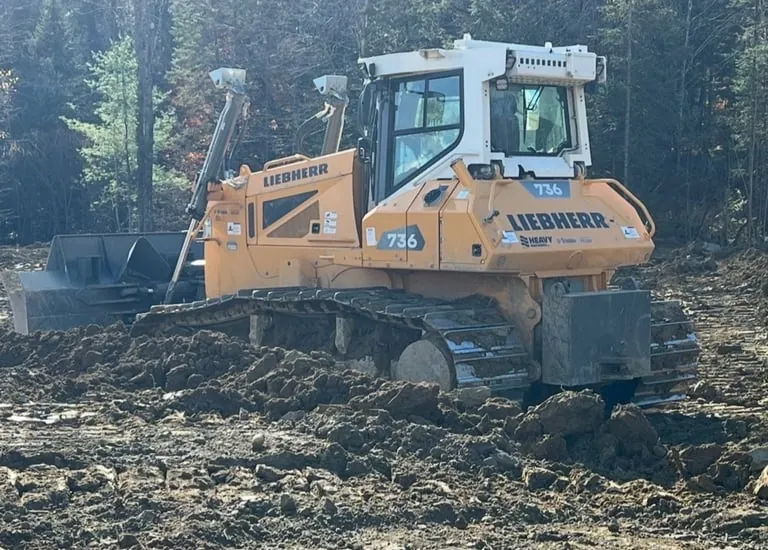
A useful site visit should answer what stays, what goes, how the crew reaches the work, how material is handled, and what the ground should look like at completion. Cross Country's equipment fleet makes it possible to match the machine and approach to the site instead of forcing every job into one method.
How Cross Country Land Services helps
Cross Country Land Services helps Maine property owners, developers, and project teams turn overgrown ground into a workable next step. The team can assess whether the site needs selective brush removal, forestry mulching, full clearing, access work, excavation, drainage, or erosion controls, then organize the work around the whole property.
For an estimate that reflects the real project, share the location, the approximate work area, photos from the entrance and inside the growth, the intended use, and anything known about access, utilities, water, or retained features. When you are ready, start a project conversation with the Cross Country team.
The practical next step
Clearing overgrown land is most effective when it starts with a clear destination. Define the use, inspect the ground, protect utilities and sensitive features, select the method that fits the finish, and plan the material and access before equipment arrives. That sequence gives the property a better chance of being useful long after the vegetation is gone.