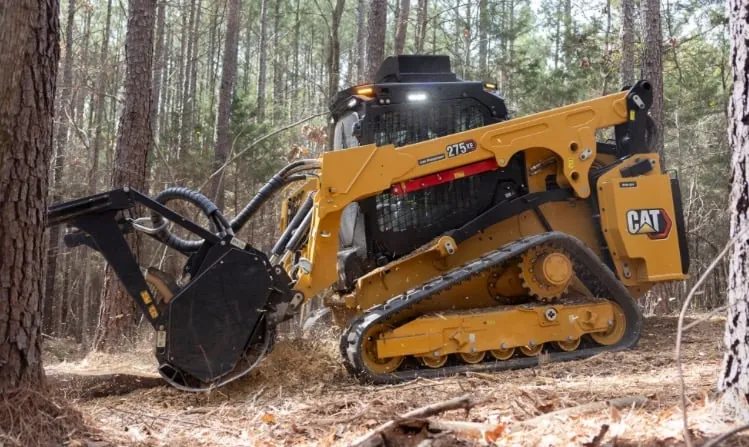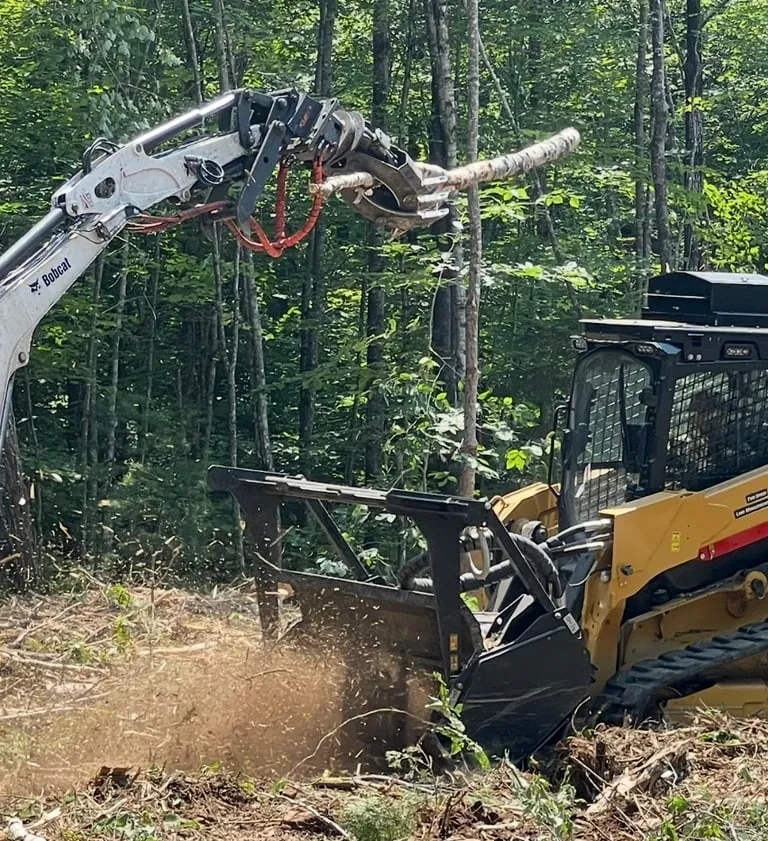
The cost to clear land is rarely a simple price-per-acre question. Two parcels with the same acreage can require very different work. One may be open with light brush and firm access. The other may have mature trees, ledge, wet ground, buried debris, a narrow entrance, and a future driveway or homesite that changes what “cleared” needs to mean.
The useful question is not only, “What will it cost to clear this land?” It is, “What work does this property need to become useful for my next step?” That next step might be a building site, a better view, a pasture, a trail system, a utility route, or a dependable access road. Defining it first keeps a quote focused on the outcome rather than a vague amount of equipment time.
Start with the end use, not the acreage
Acreage matters, but it does not tell the whole story. A contractor needs to know whether the goal is selective brush removal, a clean homesite, a new road corridor, full stump removal, rough grading, or preparation for construction. Each goal changes the equipment, the sequence of work, the amount of material that stays on site, and the amount of finish work required.
For example, opening a recreational trail through light growth can be a very different scope from preparing a building envelope. A homesite usually requires decisions about tree limits, stumps, topsoil, drainage, access for future trades, and where cleared material will go. A good estimate separates these tasks so you can see what is included and what remains optional.
Before asking for a number, write down the next use of the land and the parts of the property that must remain protected. Photos are helpful, but a walk-through is better for a parcel with slopes, woods, water, wet areas, or tight access. For broader service options, review Cross Country’s Maine land services before deciding which parts of the project belong in the first phase.

Vegetation determines the kind of clearing
“Wooded” can mean almost anything. Light grass and saplings are not the same as dense brush, mature hardwood, storm-damaged timber, old fence wire, or a mixed stand with large stumps. The height, diameter, density, and species of vegetation all affect production. The more material that must be cut, handled, hauled, chipped, or removed, the more labor and machine time the work requires.
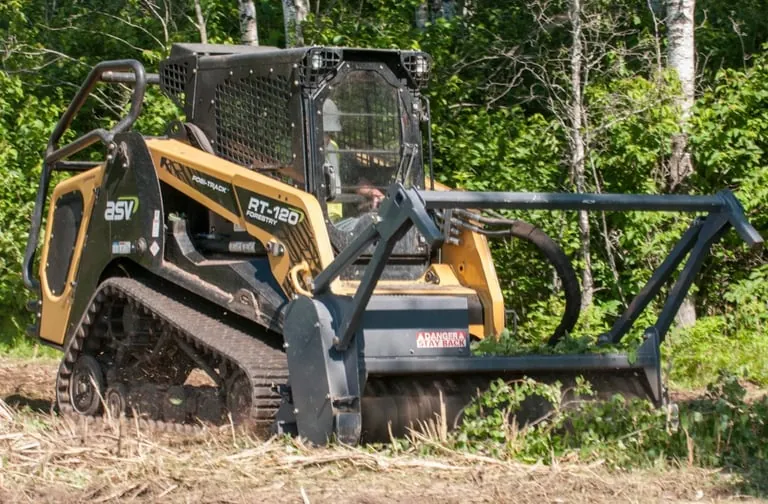
The treatment choice matters just as much. Forestry mulching can be a strong fit for brush, saplings, invasive growth, trail corridors, sightlines, and areas where leaving a protective mulch layer is useful. It keeps organic material on site and can avoid the separate process of building, burning, or hauling brush piles. It is not automatically the right answer for a foundation area, utility trench, septic field, or any site that needs stumps removed and subgrade prepared.
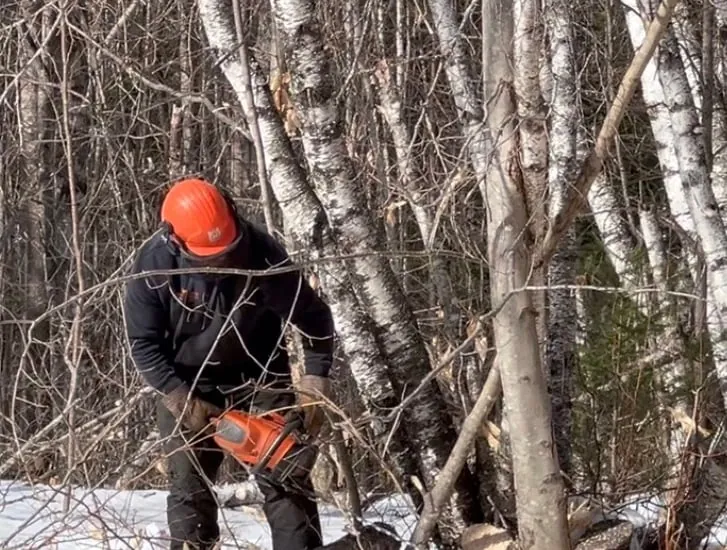
Conventional clearing often makes sense when trees and stumps must be removed, when material needs to leave the site, or when the property is moving directly into excavation and grading. The estimate should say whether trees are being felled, whether stumps are staying or being grubbed, and whether brush is mulched, piled, chipped, hauled, or otherwise managed. Those details are where many “low” quotes stop being comparable.
If the priority is vegetation management rather than full site preparation, Cross Country’s forestry mulching fleet shows why equipment selection should follow the terrain and material, not only the size of the parcel.
Access can change the quote before clearing begins
A productive machine still has to reach the work safely. Narrow gates, steep entries, soft shoulders, low wires, poor turning space, and long travel distances all affect mobilization and daily production. A site that appears close to the road may still need a temporary route, mats, a turnaround, or careful staging to keep equipment moving without damaging the property.
Access also affects what happens after the first clearing pass. If a future driveway or construction route is part of the plan, it can be more efficient to coordinate the corridor, drainage, and clearing together. That prevents paying to open ground twice, then disturbing it again when trucks and utility crews arrive.
In Maine, a road is not just a strip of gravel. It has to direct water away from the travel surface and hold up through freeze-thaw cycles, rain, and seasonal use. The residential land services page outlines the related driveway, drainage, and stabilization work that may belong in the same conversation.
Ground conditions affect time, risk, and finish work
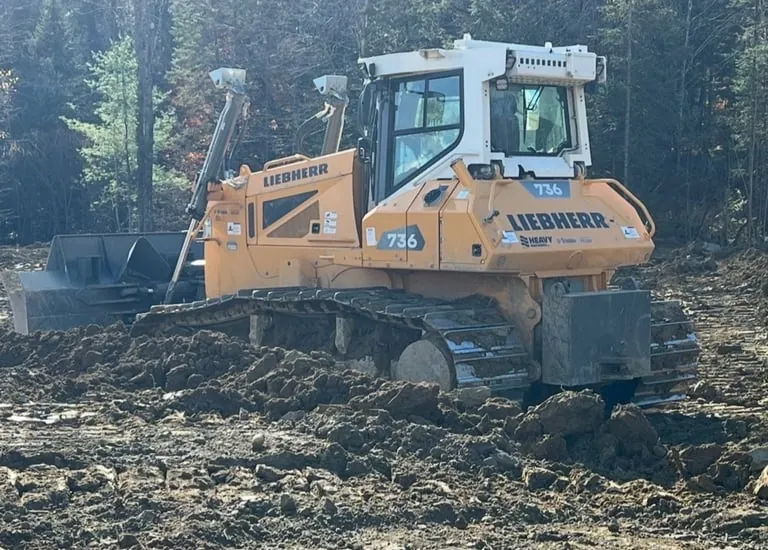
Maine ground conditions can vary sharply within one property. Ledge, boulders, wet pockets, organic soil, unstable slopes, and old fill can change the production rate and the equipment needed. A contractor cannot reliably see every condition from an aerial image, which is why a site visit is valuable before a detailed quote is finalized.
Soft or saturated ground may limit when and where equipment can work. Steeper terrain can require a slower approach, erosion controls, and a plan for safe material handling. If the work opens bare soil, the project may also need stabilization so rain does not move sediment into a ditch, stream, wetland, or neighboring property.
The Maine Department of Environmental Protection maintains erosion and sediment control best-management practices for planning and maintaining controls. The practical takeaway for a property owner is simple: soil protection is part of the scope, not a cosmetic extra added after the work is complete.
This is especially important when a project includes grading, excavation, culverts, or drainage improvements. Those services can be planned with the clearing phase rather than bolted on after the property is exposed. Cross Country’s civil and government sitework experience is relevant when a project needs that broader field coordination.
Material handling is a major cost driver
Clearing creates material, and the plan for that material has a real effect on the estimate. Mulched brush, marketable timber, firewood, stumps, slash, rock, and unsuitable soil all need a destination. Leaving material in an approved location can be less intensive than loading, hauling, and disposing of it, but it must still fit the property’s future use and local requirements.
Ask a contractor to identify what remains on site, what is removed, where it will be placed, and whether that area will need later cleanup. A quote that includes clearing but says little about stumps, brush, or disposal can leave a property owner with the most visible part of the job unfinished.
Large trees and stumps deserve special attention. Keeping stumps may be appropriate for a trail or woodland edge, but a building pad, lawn, pasture, or utility route can require a more complete removal plan. The same applies to buried debris found on older sites. A good proposal explains how unexpected material will be handled rather than pretending it cannot happen.
Permits, utilities, and protected areas come first
Land clearing is not only an equipment decision. Work near wetlands, streams, shoreland areas, flood-prone ground, or protected natural resources may need advance review. Maine’s Natural Resources Protection Act information is a useful starting point for understanding when activities near protected resources may require a permit. Local rules can also apply, so a site-specific check is worth doing before clearing begins.
Shoreland locations need particular care. Maine’s shoreland zoning guidance explains that local governments administer standards for development and vegetation removal near shoreland areas. The right approach is to identify the boundary and the desired work before a crew arrives, not after trees or ground cover have been removed.
Utilities are another non-negotiable early step. Anyone planning to dig, excavate, or install posts should use Maine Dig Safe to request utility marking before excavation. That protects people, avoids service interruptions, and keeps a clearing or access project from becoming an expensive repair. Clearing teams also need to know about overhead lines, private utilities, wells, septic systems, and old structures that may not appear in public marking records.
What a useful site visit should answer
A site visit is not a formality. It is where a general clearing question becomes a workable plan. The contractor can see whether the entrance supports equipment, where the work area begins and ends, what needs to stay, where water already moves, and what condition the ground is in. That context is difficult to capture in a phone call, particularly on a wooded or uneven parcel.
Property owners get more from the visit when they identify the decision-makers and the intended use ahead of time. If a survey, septic design, house plan, driveway layout, or concept sketch exists, bring it. If it does not, walk the site and mark broad priorities: trees to preserve, views to open, an access route, wet places to avoid, old stone walls, boundary markers, utility locations, and any area that needs a cleaner finish.
The visit should also distinguish known conditions from unknowns. A contractor may see surface rock, but not every buried boulder. They can identify a soft area, but a detailed drainage or soil investigation may still be needed for construction decisions. The point is not to eliminate every unknown. It is to identify which unknowns could change the scope and make a reasonable plan for them.
For a larger or more technical project, this early review can clarify whether clearing should happen as a stand-alone phase or alongside excavation, access-road work, culverts, or erosion control. The more closely the first phase matches the final use, the less likely the property is to be disturbed twice.
Three common clearing scopes, and what changes
Property owners often use the same word, “clearing,” for three very different jobs. Sorting the project into a clear scope helps prevent confusion when estimates arrive.
Selective opening and vegetation management
This scope is about improving use without turning the parcel into a construction site. It may include brush, saplings, invasive growth, trail edges, field borders, sightlines, or a small open area for recreation. Forestry mulching can be a fit when stumps can remain and a mulched finish supports the land use. The estimate should define the density of vegetation, the intended limits, and whether larger trees are excluded.
Homesite or outbuilding preparation
This scope needs a more exact finish. The site may need trees removed, stumps addressed, brush managed, topsoil protected or moved, and ground prepared for later excavation. The project may also need a temporary or permanent access route for delivery trucks. A low-impact mulching pass can still play a role around the edges, but the building area should be planned with the next construction step in mind.
Full site preparation
Full site preparation can combine clearing with stumping, grading, drainage, road construction, trenching, aggregate, and environmental controls. The cost is shaped by how the pieces connect. A project that starts with a thoughtful sequence can often avoid rehandling material or reopening finished ground. That is why a clearing quote for a larger project should not be viewed in isolation from the civil work that follows.
Seasonal timing matters in Maine
A good project plan accounts for the calendar as well as the scope. Ground conditions, weather, permit timing, nesting or habitat considerations, material availability, and the schedule of the work that follows all affect when clearing makes the most sense. There is no single best season for every property, but waiting until the last possible moment can narrow the options.
Mud season can limit access and increase the risk of rutting or compaction on softer ground. Dry periods may make travel easier but can increase the need to manage dust or wildfire risk. Fall and winter work can be productive on some properties, yet snow cover can conceal obstacles and make it harder to judge final grading. A site-specific plan is more useful than a blanket rule about the right month to clear.
The date that matters most is often the date of the next phase. If a builder, septic installer, surveyor, utility crew, or road contractor is expected later in the year, work backward from that milestone. Leaving room for permits, utility marking, weather delays, and ground stabilization keeps the full project from being driven by a rushed clearing decision.
It is also worth preserving an area that will carry future traffic. Sending every truck over a freshly cleared surface before drainage or a proper base is established can create damage that has to be repaired later. The right access plan protects both the schedule and the property.
Define what “finished” looks like
A quote can be accurate and still disappoint the owner if “finished” was never defined. One person may expect a smooth lawn-ready area. Another may only need brush removed and travel lanes opened. A third may want a rough construction pad where excavation will continue. None of these is wrong, but they have different cost, timing, and material-handling needs.
Ask for the expected condition of the ground, the treatment of stumps, the limits of the cleared area, the location of remaining piles or mulch, and whether any final grading or stabilization is included. If a tree line, stone wall, wet edge, or neighbor boundary must remain untouched, put it in the plan. Clarity at this stage helps a crew work efficiently and gives the owner a straightforward standard for the completed project.
The desired finish also helps determine whether work should be phased. On a larger parcel, it may make sense to open access first, clear a defined work area next, and leave lower-priority sections for a later season. Phasing can protect cash flow and reduce unnecessary disturbance, as long as the first phase does not block the next one.
Know when the clearing plan needs more input
Some projects need more than a clearing contractor’s field assessment. A new home, commercial building, subdivision, shoreland project, stream crossing, or major drainage change may require a surveyor, engineer, designer, soil evaluator, forester, or permitting professional. Their input can define limits and elevations that should guide the clearing work from the beginning.
Bringing the right people in early is not about making a simple property project complicated. It is about avoiding a costly mismatch. For example, clearing a future septic area before its location is confirmed can create rework. Opening a driveway without a drainage plan can lead to washouts. Removing vegetation near protected resources before the boundary is understood can create an avoidable compliance problem.
When the project is straightforward, a clear scope and a site visit may be all that is needed. When the project has design, environmental, access, or permitting complexity, use the site plan to organize the clearing around the decisions already made. That approach keeps the contractor, owner, and other project partners working from the same ground truth.
A simple decision timeline helps. Confirm the intended use, identify protected areas and utilities, mark the limits, choose the desired finish, then schedule clearing around the next project milestone. Those few decisions give a contractor the information needed to build a quote that reflects the real property instead of an assumed average.
How to compare land-clearing quotes fairly
A fair comparison starts with the same scope. If one proposal assumes mulching brush in place and another includes tree removal, stumping, haul-off, rough grading, and erosion controls, the lower number is not necessarily the better value. It is simply a different project.
Use this checklist when reviewing an estimate:
- What exact area is included, and how are the limits marked?
- What vegetation, trees, and stump sizes are included?
- Will material be mulched, piled, hauled, chipped, or removed?
- What access, mobilization, and staging assumptions are built in?
- Are drainage, erosion control, and finish grading included?
- Who is responsible for permits, utility marking, and approvals?
- How will rock, buried debris, or unsuitable ground be handled?
- What does the site look like when the work is considered complete?
It is also reasonable to ask what could change the price. A contractor should be able to explain the conditions that are visible now and the unknowns that may be found in the field. That clarity helps you budget for a realistic project instead of treating every surprise as a disagreement.
Ways to make the project more efficient
The best way to manage the cost of clearing land is not to squeeze out important steps. It is to organize the work in the right order. Mark the areas you want to keep, identify the future driveway or building location, decide whether stumps matter, and resolve obvious utility or permitting questions before equipment mobilizes.
Bundling related work can also reduce repeated mobilization and disturbance. For example, a property owner may benefit from planning clearing, access, drainage, and rough grading as connected phases. The exact sequence depends on the site, but an early plan reduces the chance of reopening the same ground later.
Finally, save the finish you actually need for the phase you are in. A future construction site may need a clean, well-defined work area. A recreational trail may only need selective clearing and stable access. Matching the finish to the purpose helps protect the budget without leaving the land in a condition that creates another problem.
How Cross Country Land Services helps
Cross Country Land Services works statewide from Jay, Maine, with the equipment and field experience to look beyond the first clearing pass. The team can help property owners and project teams think through vegetation management, access, excavation, drainage, erosion control, and the next stage of a site.
The practical first step is a conversation about the property, the desired finish, and what comes after the clearing. Bring photos, a location, any survey or plan you have, and a clear description of the outcome you need. From there, the scope can be organized around the work that will make the property usable. Start a project conversation when you are ready to map out the site.
The bottom line
The cost to clear land in Maine depends on much more than acreage. Vegetation, access, terrain, material handling, utilities, drainage, permits, and the final use of the site all shape the work. The strongest estimate is not the one that hides those factors. It is the one that makes them clear, so you know what your property will be ready for when the equipment leaves.