Vegetation Management
Forestry Mulching Across Northern New England
Open overgrown ground, maintain access, and manage woody growth with a practical finish that fits the next use of your property.
Discuss Your Project
Clear a path without overworking the ground
Forestry mulching is a practical way to manage brush, saplings, invasive growth, and smaller woody material where the goal is access, visibility, maintenance, or a more usable piece of land. Instead of cutting vegetation and leaving piles for a separate phase, the machine processes suitable material into a mulch layer as it moves through the work area.
For many Maine properties, that means a cleaner result with less handling of brush and less disruption than a full excavation scope. It can be a strong fit for trails, field edges, camp roads, right-of-way maintenance, view openings, recreational ground, and properties that have become difficult to move through or maintain.
The useful starting point is the result you need after the work, not simply the acreage. Cross Country looks at the vegetation, terrain, access, and intended use so the treatment matches the property rather than applying the same pass to every site.
Where forestry mulching works well
Mulching is most effective when the work is focused on surface vegetation management. It can open ground that has filled in with brush, maintain an existing route, reduce fuel around structures, and improve the way a property looks and functions without automatically turning it into a construction site.
- Overgrown fields, woods edges, and property lines
- Trail systems, camp roads, and seasonal access routes
- Right-of-way and utility-corridor vegetation management
- Brush control around homes, outbuildings, and work areas
- Views, sightlines, and selective opening work
- Preparation for a later clearing or sitework phase
It is also useful when leaving organic material on the ground supports the land use. The mulch layer can help cover disturbed soil and keeps brush from becoming a separate hauling or disposal problem. The finished appearance varies with the material, density, and the amount of work required, so it is important to agree on the limits and the expected finish before equipment arrives.
Equipment should follow the site
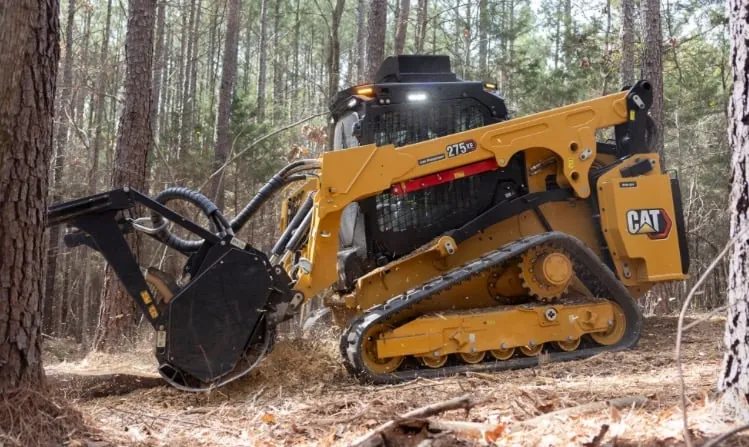
Dense brush, steep ground, ledge, wet pockets, larger stems, and tight access all change how a crew approaches the work. A machine that is productive on an open field edge may not be the right choice for a narrow trail, a soft shoulder, or a site with trees and features that need to remain protected.
Cross Country's forestry mulching fleet supports work from focused property maintenance to larger vegetation-management scopes. The team plans access, turning space, ground conditions, and the material itself before selecting the approach. That field-first planning helps protect the parts of the property that are not part of the work.
Know when mulching is not enough
Forestry mulching is not a substitute for every kind of land work. When a project needs root balls removed, subgrade prepared, drainage installed, a driveway built, or a building area graded, the work needs to be planned as site preparation, not only vegetation management.
A homesite, septic area, utility trench, or foundation location often calls for more than a mulching pass. Those areas may need trees and stumps handled differently, material moved or removed, and the ground prepared for the next trade. Starting with the intended outcome avoids paying to reopen the same ground later.
Cross Country can coordinate forestry mulching with land clearing, driveway and residential sitework, or larger civil sitework when the project requires a broader plan.
Plan around access, water, and what stays
Good mulching work starts with clear boundaries. A crew needs to know where equipment can enter, what trees or features must remain, whether the ground stays firm enough for the work, and where water moves across the property. Stone walls, boundary markers, old wire, wells, septic components, and overhead or private utilities should be identified before the work begins.
Areas near wetlands, streams, shoreland ground, and steeper slopes deserve particular care. A site-specific plan may include leaving buffers, changing the work limits, using a lighter-touch approach, or sequencing clearing with erosion control and drainage work. The goal is to improve the land without creating a problem for the next rain or the next phase.
For projects that include digging or trenching after vegetation management, utility marking and access planning should happen early. That makes it easier to keep the route clear, protect the property, and avoid repeating work once excavation starts.
Set the finish before the first pass
A productive mulching project still needs a clear definition of finished. Some properties need a broad, passable trail with vegetation cut back from the edges. Others need a more open field perimeter, a maintained right-of-way, a cleaner view, or a work area that remains natural but manageable. Those are different results, even when the same equipment is involved.
The desired finish affects how closely the crew works around retained trees, what height vegetation is processed to, how the edges are treated, and whether a second pass is useful. It also affects where the work should stop. On larger properties, concentrating the scope on the areas that support access, safety, and the next planned use can be more practical than opening every acre at the same time.
Cross Country starts with the work limits and the purpose of the area, then builds the field plan around them. That makes it easier to protect established trees and site features while delivering a result that feels intentional rather than simply cut back.
Timing matters on Maine ground
Forestry mulching can be scheduled through much of the year, but the best timing depends on the site. Ground firmness, weather, access, the work that follows, and sensitive areas on the property all influence when a crew can work efficiently. A route that carries equipment easily in one season may need a different plan during spring thaw or after prolonged rain.
Planning early also gives a property owner more control over the sequence. A managed access route can be opened before a survey, a build, utility work, or larger clearing begins. Vegetation work can be coordinated with a driveway, drainage, or construction schedule instead of becoming a last-minute obstacle when the site needs to move quickly.
For seasonal properties, wooded lots, and larger project sites, a short conversation before the ground changes can prevent delays later. The team can help identify whether forestry mulching is the right first phase or whether the work should be coordinated with the broader site plan from the start.
What helps shape a useful quote
A good forestry mulching estimate is built around the ground, not a generic package. Photos and approximate acreage are a helpful start, but a conversation becomes much more useful when it also includes the purpose of the work and the conditions on site.
- What you want the area to be used for afterward
- The rough size and location of the work area
- The type and density of brush, saplings, and trees
- Access limits, slopes, wet ground, or ledge
- Trees, stone walls, boundaries, or other features to protect
- Whether the work connects to a road, driveway, build, or utility plan
A site visit can clarify the questions that photos cannot answer: how the equipment reaches the work, where the ground changes, how far material can be managed, and what a finished area should look like. That level of planning keeps the scope clear before the first pass is made.
Frequently Asked Questions
Forestry mulching for Northern New England property owners and project teams
What does forestry mulching do?
Forestry mulching cuts and processes brush, saplings, and smaller woody growth into a mulch layer on the ground. It is often a practical approach for opening overgrown areas, maintaining access, improving visibility, and managing vegetation without hauling every piece of material away.
Is forestry mulching the same as full land clearing?
No. Forestry mulching is a surface vegetation-management method. It does not remove root balls, prepare a building pad, install drainage, or replace the excavation and grading work needed for a homesite, driveway, utility route, or other construction-ready area.
Can you mulch larger trees and stumps?
The right treatment depends on tree size, species, density, terrain, and the final use of the property. Larger trees and stumps may need a different approach, especially where the next phase requires excavation, construction access, or a smooth finished surface.
Will the mulch layer stay on the property?
In most vegetation-management work, the processed material remains on site as a mulch layer. That can help protect exposed soil and reduce the need to handle brush separately. The exact finish should be discussed during site planning, particularly near wetlands, shoreland areas, slopes, or areas intended for construction.
How do I get an accurate forestry mulching quote?
Share the intended use of the area, rough acreage, photos, access information, and any limits such as trees to save, wet ground, utilities, stone walls, or boundary markers. A site review helps determine the equipment, sequence, and finish that make sense for the property.
Start With the Ground You Have