Homes, Camps, And Rural Property
Maine Driveway Contractors
Build a driveway that gets you in, keeps water moving, and gives the property a dependable start for the work ahead.
Discuss Your Driveway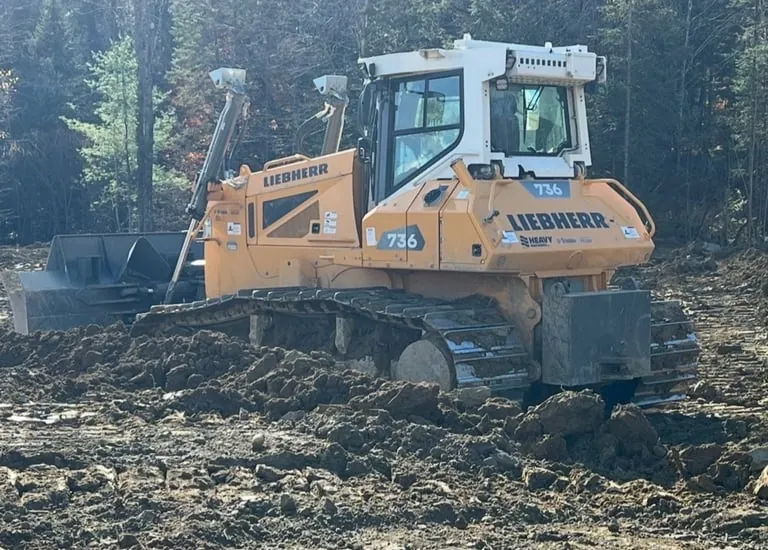
Build the route around the property, not a straight line on a map
A new driveway does more than connect a road to a house, camp, garage, or working area. It sets the route equipment will use, the way guests arrive, and often the first piece of permanent infrastructure on the property. The layout needs to make sense for the land as it is, as well as for the use that comes next.
Cross Country plans driveway construction around the full route. That starts with where the driveway meets the public or private road, then considers grades, curves, ledge, wet ground, trees to retain, drainage paths, and the space needed for construction traffic or year-round use. A route that looks shorter on paper is not always the route that holds up best through rain, thaw, deliveries, and regular traffic.
Maine properties put real pressure on access. A narrow wooded approach, changing ground conditions, spring runoff, steep sections, and seasonal use can all affect the right design. Taking those conditions seriously before gravel is placed helps create a driveway that feels like part of the property instead of a recurring problem to work around.
Driveways for the places people actually use
The intended use shapes the work. A short residential driveway may need a clean entrance, reliable drainage, and enough room for normal vehicles and deliveries. A camp driveway may need to handle a longer wooded route, changing seasonal conditions, and a practical turnaround. A property being prepared for a build may need a route strong enough for crews, concrete trucks, materials, and utility work before it becomes the finished daily access.
- New driveways for homes, camps, garages, and outbuildings
- Gravel driveway extensions and new property access
- Driveway rebuilds, regrading, and surface improvements
- Turnarounds and practical delivery access
- Culvert installation and roadside drainage coordination
- Access preparation for new homesites and utility work
It helps to be clear about what needs to travel the route. A driveway used by a few personal vehicles has different needs from one that must support a new build, a septic installation, a firewood delivery, or regular equipment access. Cross Country can help sort out the practical difference early, so the driveway is not undersized for the work it needs to support.
Good drainage protects the surface you pay for
Water is one of the first things to understand before a driveway is built. Surface water that runs down the route, crosses it in the wrong place, or has nowhere to go can soften the base, move gravel, create ruts, and shorten the life of the finished surface. The driveway and its drainage need to work as one system.
That may mean setting the road elevation correctly, shaping a crown so water sheds to the sides, creating ditches or swales, installing a culvert where flow must pass underneath, or choosing a different route around a wet pocket. The best choice depends on the actual movement of water across the property, not a generic rule applied after the route is cut.
A well-planned route also gives future maintenance a better starting point. Gravel roads and driveways still need care over time, especially after winter and heavy weather, but a route with clear drainage and a sound base is easier to maintain than one that has been fighting water from day one.
Start with a stable base and the right finished surface
The visible gravel is only part of a dependable driveway. Ground preparation, shaping, base material, and compaction all influence how the finished route performs. Soft soil, clay, organic material, shallow ledge, and previously disturbed ground each call for a different discussion before the driveway surface is placed.
Cross Country looks at the route in practical layers. First, can the ground be prepared to support traffic? Next, how should the route be graded so vehicles can use it comfortably and water can leave it? Then, what material and finish make sense for the expected use? This approach is particularly useful for rural driveways where the route needs to remain reliable long after a building crew has moved on.
The right finish is not always a perfectly smooth appearance on the first day. It is a surface that suits the property, drains well, and can be maintained with a clear understanding of what is underneath it. That gives the owner a better basis for making phased improvements without redoing the entire route later.
Coordinate the driveway with clearing and the work that follows
A driveway is often the first step into a larger project. The proposed house location, a future septic area, utility routes, retained trees, and material staging can all influence where the driveway should go. Considering the finished plan before the route is built helps avoid clearing the wrong area or opening a road that later conflicts with the next phase.
Cross Country can bring the connected work into one conversation. That can include land clearing for a homesite, excavation and grading, culverts, drainage, and utility preparation. For a larger private road, worksite route, or development access, see the team's Maine access road construction services.
Coordinating these pieces does not mean every project needs the largest possible scope. It means the first phase is planned to support the next useful decision. A driveway can be built for a future home, a camp that will be expanded later, or a property that simply needs reliable access now without closing off better options down the road.
It also helps to decide what can wait. A property may need a dependable entrance and a first section of driveway before a later build area is finalized. Another project may need the route completed before a septic contractor, well driller, or building crew can do their work. Separating immediate access from future improvements gives the owner a more useful way to phase the work without losing sight of the full property plan.
Bring the details that make a driveway estimate useful
A rough length is helpful, but it does not tell the whole story. Two driveways of the same length can require very different work because of access, ground conditions, drainage, slopes, trees, and the way the finished route will be used. Good information early makes the first conversation more productive and gives the team a clearer picture of the scope.
- Property address and the proposed start and end of the route
- Photos, a map, survey, sketch, or plan showing the driveway area
- What the driveway needs to serve now and in the future
- Known wet spots, drainage paths, slopes, ledge, or soft ground
- Road-connection details and room for vehicles to turn around
- Planned homes, camps, garages, utilities, or construction access
A site walk can then confirm the conditions that matter in the field, including where equipment can enter, how the ground changes along the route, where water is moving, and whether the best driveway alignment differs from the first idea. The result is a clearer path from raw ground to dependable access.
Frequently Asked Questions
Driveway construction with the full property in mind
What does a new gravel driveway need?
A useful driveway needs a route that fits the property, a stable base, water management, enough width for the intended traffic, and room to turn around where needed. The exact scope depends on soil, ledge, slopes, wet areas, the road connection, and how the property will be used.
Can you improve an existing driveway?
Yes. Existing routes can often be evaluated for drainage, surface condition, rutting, soft areas, width, turning space, culverts, and the way water moves across or beside the road. The right improvement may be targeted maintenance, regrading, added material, drainage work, or a larger rebuild.
When does a driveway need a culvert?
A culvert may be needed where a ditch, swale, or natural water path has to pass under the driveway. Its location and size need to work with the existing drainage pattern, road elevation, and future maintenance. Looking at water movement before the route is built is far easier than correcting it after the surface starts to fail.
What should I share to request a driveway quote?
Send the property location, photos or a map of the proposed route, the road connection, the purpose of the driveway, rough length, known wet or steep areas, and any plans for a house, camp, garage, utilities, or future construction. A site walk can confirm the conditions that shape the scope.
Start With The Route