Vegetation Management
Brush Clearing Across Northern New England
Reclaim overgrown ground, open access, and make the next step on your property easier to plan.
Discuss Your Project
Bring overgrown ground back into use
Brush can close in a property gradually. Field edges disappear, trails become difficult to follow, old access routes narrow, and vegetation begins to crowd working areas, buildings, and drainage features. Clearing it is more useful when the result is tied to a purpose: safer access, a visible boundary, a manageable field edge, a cleaner work area, or a better start for the next phase of a project.
Cross Country plans brush clearing around those practical outcomes. The team looks at the density and type of growth, the ground under it, the way equipment can reach the area, and the features that need to remain. That avoids treating every overgrown area like the same job and helps define a finish that will still make sense after the equipment leaves.
Useful for the places that get hard to maintain
Brush clearing is a strong fit where unmanaged growth is getting in the way, but the site does not necessarily need full construction clearing. It can restore room to move, improve sightlines, and make routine property maintenance much more practical.
- Field edges, fence lines, and property boundaries
- Camp roads, trail corridors, and seasonal access routes
- Brush around homes, barns, outbuildings, and work areas
- Overgrown lots that need to be evaluated or maintained
- Vegetation along planned driveways and utility routes
- Ground that needs to be opened before later sitework
The important distinction is between making land manageable and preparing it for construction. A cleared path or field edge may only need vegetation managed. A homesite, septic area, foundation location, or new driveway can require trees, stumps, grading, drainage, and material handling to be planned together from the start.
Brush also changes from one part of a property to another. Thin field-edge growth, dense young hardwood, old pasture regrowth, and vegetation that has grown around stone, debris, or drainage all call for different expectations. A useful plan identifies which areas need a clean opening, which only need access restored, and which should stay undisturbed until a larger project decision is made.
The right method follows the ground
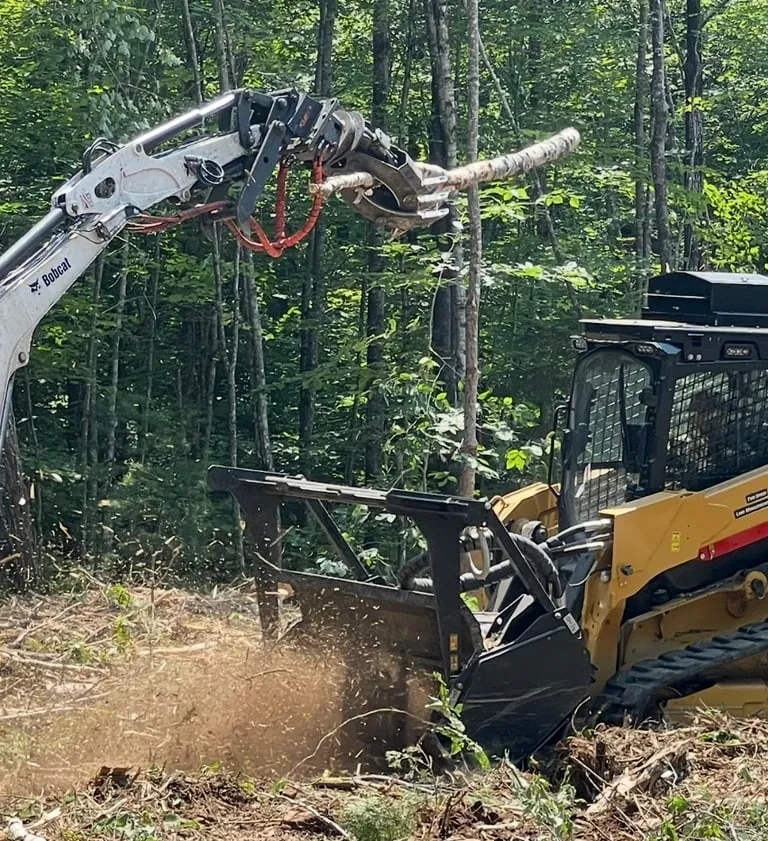
Some brush can be managed efficiently with forestry mulching, which processes suitable vegetation into a mulch layer on the ground. Other areas may have thicker stems, hidden material, ledge, wet pockets, narrow access, or retained features that call for a different approach. The method should fit the property, not the other way around.
Cross Country's equipment and field experience allow the crew to plan for focused maintenance work as well as larger, connected scopes. When vegetation management needs to lead into a road, drainage improvement, utility route, or building area, the work can be sequenced so the ground does not need to be opened twice.
Protect what needs to stay
Successful brush clearing is as much about the limits as the cleared area. Mature trees, stone walls, wet ground, drainage outlets, wells, septic components, boundary markers, old wire, and private utilities are easy to overlook when vegetation has grown in around them. Identifying those features before work begins gives the crew a clear plan for access and protection.
Ground near wetlands, streams, shoreland areas, and slopes deserves particular care. In those locations, the project may need a narrower work limit, retained vegetation, a lighter approach, or coordination with erosion and drainage measures. The goal is a cleaner, more usable property without creating unnecessary maintenance or water problems afterward.
Timing is part of that planning as well. Firm ground and dry access can make a project more straightforward, while spring thaw, saturated soil, or a narrow seasonal route may require a different sequence. Talking through the property before the work is urgent gives more room to choose the right approach and coordinate the clearing with any survey, build, or maintenance schedule.
Plan the finish before clearing starts
"Clear" can mean very different things from one project to the next. A trail may need brush cut back from the edges while retaining a natural woodland character. A field perimeter may need a clean, maintainable line. A work area may need enough room for equipment, delivery access, or a future survey. The expected finish affects the scope, equipment, and time needed to do the work well.
Before a project begins, it helps to decide what will happen next on the ground. If the cleared area leads to a building pad, septic plan, road, or trench, that information should guide the first pass. Cross Country can coordinate brush clearing with forestry mulching, land clearing and sitework, or residential access and drainage work when the project calls for a broader plan.
What helps build a useful quote
A useful estimate starts with more than acreage. A small, dense area with poor access can require a different plan than a larger field edge with room to work. Sharing the intended use of the cleared ground helps Cross Country recommend a practical scope instead of giving a generic answer.
- The rough location and size of the work area
- Photos showing the type and density of the growth
- The access route and any soft, steep, or rocky ground
- Features, trees, or boundaries that need protection
- Utilities, wells, septic components, or drainage nearby
- What you want the area to be used for afterward
A site visit can answer the field questions that photos cannot: where equipment can turn, how the ground changes, whether debris is hidden in the growth, and how the final area should connect to the rest of the property. That preparation makes the scope clearer before the work starts.
It is also helpful to note the practical priorities before a crew arrives. A property owner may care most about opening a camp road, preserving a view, making space around a building, or creating a cleaner edge that can be maintained. Those priorities guide the work limits and help the finished area feel useful rather than simply cut back.
A clear scope makes the work easier to manage
Before work begins, Cross Country confirms how the crew will reach the area, the edges of the work, the vegetation that stays, and the condition the ground should be left in. That shared understanding matters when brush has grown across a large property or when several useful areas need attention at once. It gives the owner a practical basis for deciding what to do first and what can wait for a later phase.
It also keeps the work connected to real use. A finished access route should be passable. A cleared edge should be easy to maintain. Ground planned for future work should not be cleared beyond what that phase requires. Setting those expectations early helps the result hold up through changing seasons and changing plans.
Frequently Asked Questions
Brush clearing for Northern New England property owners and project teams
What is included in brush clearing?
The right scope depends on the ground and the result you need. Brush clearing can include managing tall grass, woody brush, saplings, vines, and dense edge growth, along with opening access and handling material in a way that fits the property. Larger trees, stumps, excavation, grading, and drainage are separate needs that may require a broader sitework plan.
Is brush clearing the same as forestry mulching?
Forestry mulching is one method that can be used for suitable brush and smaller woody growth. It processes material into a mulch layer as the equipment works. Some sites need a different method because of the vegetation, access, wet ground, retained trees, debris, or the construction work that follows.
Can brush be cleared near a driveway, home, or utility route?
Yes, with clear work limits and the right preparation. The crew needs to know where utilities, wells, septic components, drainage features, stone walls, and property markers are located before work begins. Those details help protect what stays while opening the ground that needs attention.
What do you need for a brush-clearing estimate?
Photos, the rough location and size of the work area, the purpose of the cleared ground, and any access or site concerns are a useful start. A site review can clarify the density of the growth, ground conditions, machine access, material handling, and the finish that makes sense for the property.
Start With the Ground You Have